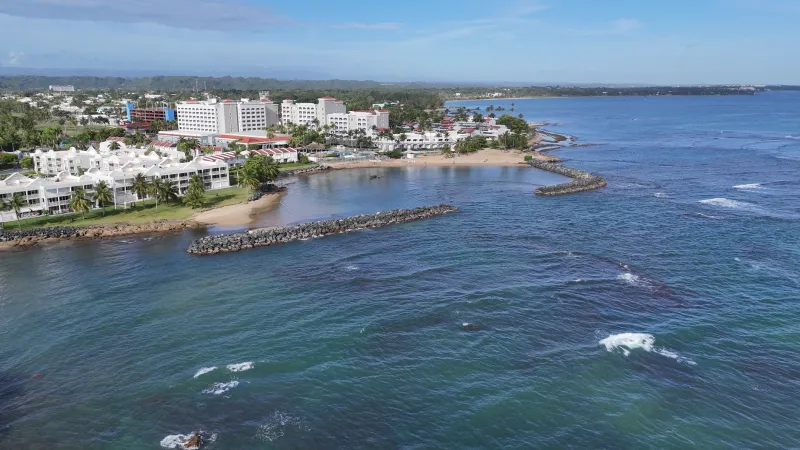
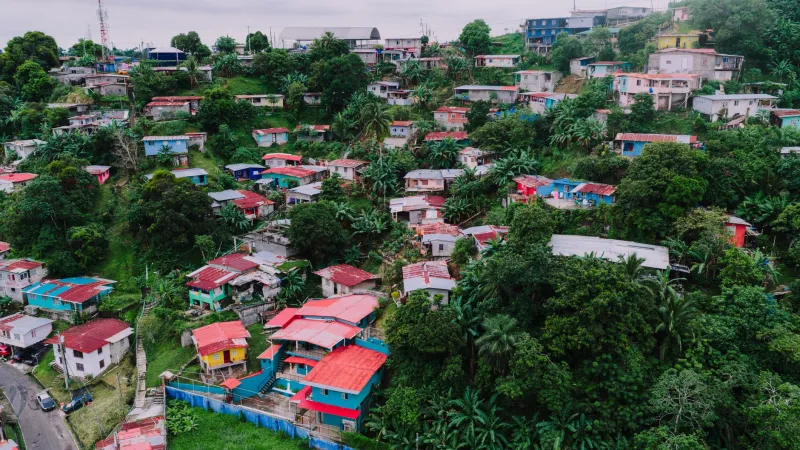
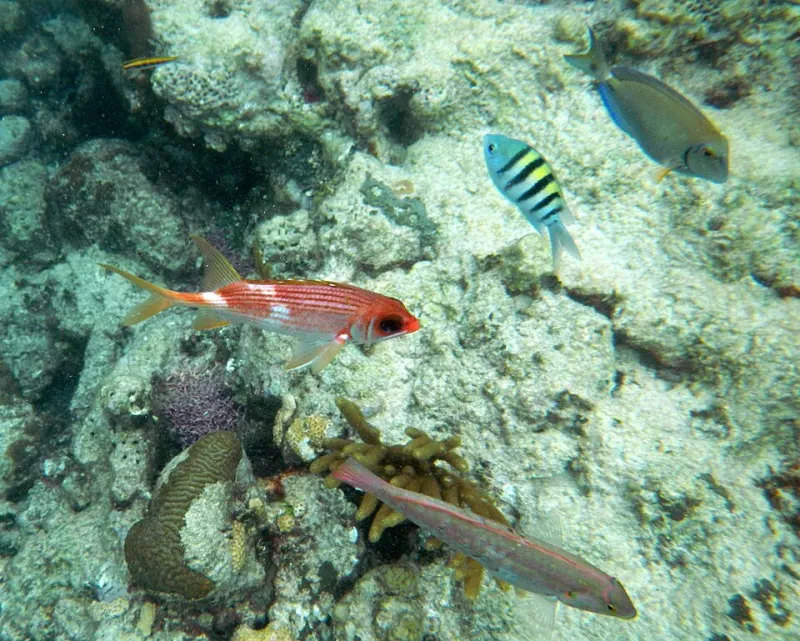
Smaller Than Connecticut, Richer Than Most Continents: The Strange Science of Puerto Rico's Endemic Species Explosion
Here's a number that should stop you cold: roughly 239 native plant species in Puerto Rico exist nowhere else on the planet. Not in the Amazon. Not in sub-Saharan Africa. Not in Southeast Asia. Only here, on an island you could drive across in about two hours.
That's the Puerto Rico paradox in a nutshell — and it's one of the most genuinely fascinating puzzles in all of conservation biology. How does a place this small end up with an endemism rate that rivals entire continental nations? The answer involves ancient geology, radical climate variation, and millions of years of evolutionary isolation doing exactly what evolution does when it's left alone long enough: it gets creative.
What "Endemic" Actually Means — and Why It Matters
Before diving into the science, it's worth being precise about the term. An endemic species is one that exists naturally in only one defined geographic area and nowhere else. Puerto Rico's endemics didn't migrate in from somewhere else and stick around — they evolved here, shaped by local pressures, local soils, local rainfall, local predators. They are, in the most literal biological sense, Puerto Rican.
For context, the entire continental United States — all 3.8 million square miles of it — has roughly 4,000 endemic plant species. Puerto Rico, at less than 0.1% of that land area, has nearly 6% of that number. Scale that up proportionally and Puerto Rico's endemism density absolutely dwarfs the mainland. That's not a rounding error. That's a biological phenomenon.
The Island Effect: Isolation as an Evolutionary Engine
Islands are, biologically speaking, laboratories. When a species colonizes an island and gets cut off from the mainland population, it starts down its own evolutionary road. Mutations accumulate. Adaptations to local conditions take hold. Given enough time — and Puerto Rico has had tens of millions of years — those isolated populations diverge so far from their ancestors that they become entirely new species.
Puerto Rico sits on a fragment of ancient oceanic crust that emerged from the sea roughly 35 to 45 million years ago. That's an almost incomprehensible stretch of time for evolution to work with. Early colonizers — seeds carried by wind or birds, insects blown off course, reptiles rafting on debris — arrived and found a world with few competitors and no predators adapted to hunting them. They diversified rapidly to fill every available ecological niche.
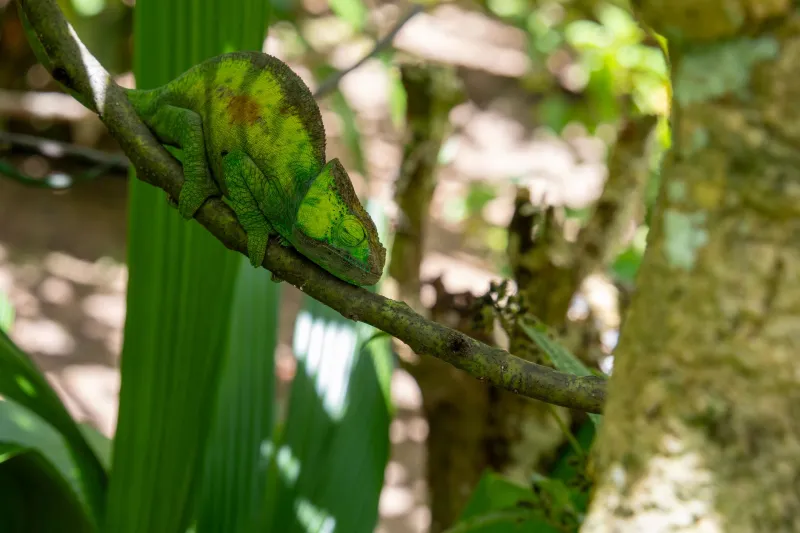
This process, called adaptive radiation, is why Puerto Rico has 17 endemic species of Anolis lizards alone. One ancestral lizard arrived. Millions of years passed. Seventeen distinct species emerged, each specialized for a different microhabitat — different perch heights, different prey, different temperature tolerances.
Microclimates: One Island, Dozens of Worlds
Isolation alone doesn't explain Puerto Rico's endemism numbers. The island's dramatic topographic variation does a lot of the heavy lifting too.
The Cordillera Central — the mountain spine running east-west through the island's interior — creates stark environmental contrasts across very short distances. The northeastern slopes receive over 180 inches of rainfall per year in some areas, feeding the El Yunque rainforest. The southwestern corner, sitting in a rain shadow, gets as little as 30 inches annually and supports a dry forest ecosystem that looks more like the American Southwest than the Caribbean.
For a species evolving in the wet montane forest, the dry coastal plain might as well be a different planet. These microclimates act as invisible walls, separating populations and allowing them to diverge. Over time, what was one species becomes two. What were two becomes several. The island's geography is essentially running parallel evolutionary experiments simultaneously.
Karst topography in the northwest adds another layer of complexity. The limestone mogotes — those rounded, forested hills that look like something out of a fantasy novel — create their own isolated pockets of habitat. Cave systems beneath them harbor endemic invertebrates that have never seen sunlight and wouldn't survive outside their particular limestone cavern. It's endemism stacked on top of endemism.
The Numbers Behind the Anomaly
The plant data is striking, but the pattern holds across taxonomic groups. Puerto Rico has 13 endemic species of freshwater fish. Roughly 50 endemic species of birds have been documented historically, with 17 still surviving today, including the critically endangered Puerto Rican parrot — one of the rarest birds in the Western Hemisphere. Herpetologists have catalogued dozens of endemic reptile and amphibian species, including every single one of Puerto Rico's native frog species.
That last point deserves emphasis. Every frog that evolved naturally in Puerto Rico — including the famous coquí — is endemic. There is no mainland population. No backup copy exists elsewhere in the wild. Puerto Rico is it.
For invertebrates, the numbers get even more staggering. Entomologists estimate that thousands of endemic insect species inhabit the island, most of them still undescribed by science. Every year, researchers discover species that have been living in Puerto Rican forests for millions of years without ever being formally named.
Why This Makes Conservation So Urgent
Here's where the paradox sharpens into something more uncomfortable. The very qualities that make Puerto Rico a biodiversity hotspot — its small size, the extreme specialization of its species, the isolation that drove all that endemism — also make it extraordinarily vulnerable.
An endemic species has nowhere to go. If El Yunque burns, if a drought kills the dry forest, if a hurricane flattens a mogote ecosystem, the species adapted to those specific conditions can't simply relocate to similar habitat somewhere else on the continent. There is no somewhere else. Extinction, for Puerto Rico's endemics, is a permanent, global loss.
Puerto Rico has already lost significant forest cover over the past century, though the island has seen some reforestation since the mid-20th century decline of the sugar industry. Urban sprawl, agricultural conversion, and climate-driven extreme weather continue to fragment remaining habitat. A species that evolved over 40 million years can disappear in a single hurricane season if its population is already small and its habitat already stressed.
For US audiences, this matters in a specific and practical way: Puerto Rico's biodiversity is American biodiversity. These species are part of US national heritage, subject to the Endangered Species Act, studied by US federal agencies, and — if lost — gone from American natural history forever. The Puerto Rican parrot recovery program has cost tens of millions of federal dollars over decades precisely because the alternative is watching a species that evolved on American soil vanish entirely.
An Anomaly Worth Understanding
The Puerto Rico paradox isn't really a paradox once you understand the mechanisms. Small land area plus extreme age plus dramatic topographic variation plus island isolation equals an evolutionary pressure cooker that produces endemism at rates that defy intuition.
What remains genuinely paradoxical is the mismatch between the island's biological significance and the attention it typically receives in mainstream American conservation conversations. Yellowstone and the Everglades dominate the national narrative. Puerto Rico — home to a higher density of unique life than almost anywhere else under the American flag — rarely makes the list.
The geography that created this explosion of life is still there. The mountains still funnel rain. The karst still shelters its strange underground fauna. The question is whether enough habitat survives long enough for the evolutionary story to keep going.